
Joint Pain in Dogs? Small Movement Changes to Watch For

A pause at the stairs or a change in getting up is worth noticing. It may be related to pain, but an observation cannot tell you which joint, muscle, nerve, or other problem is involved. The next useful step is a clear record and veterinary advice.
What to record before your vet visit
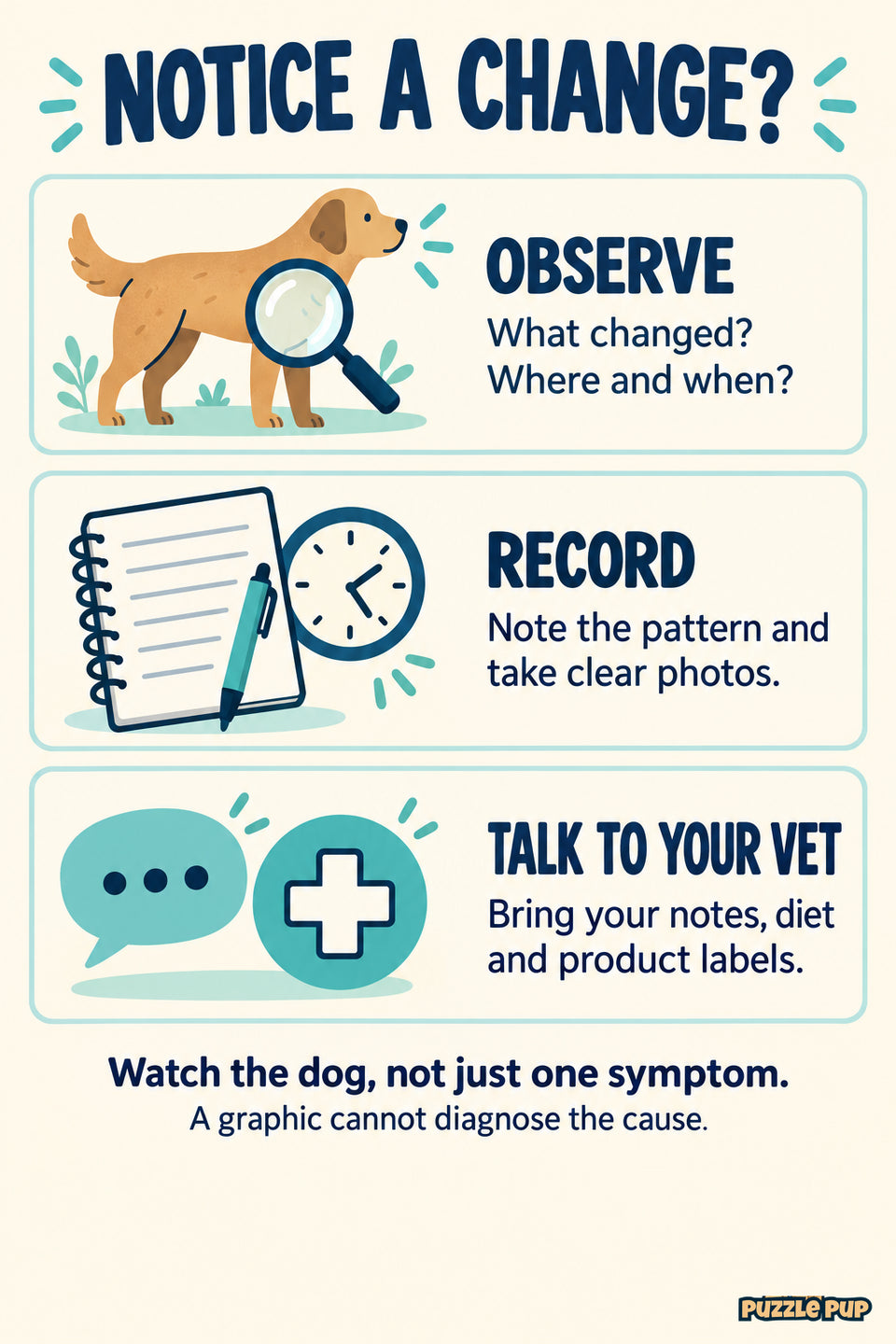
Changes to record
- Getting up more slowly after resting.
- Hesitating at stairs, furniture, or the car.
- A shorter stride, limp, or different way of walking.
- Less interest in familiar walks or play.
- Licking one area repeatedly.
- Difficulty settling comfortably.
Record when the change occurs and whether it is becoming more frequent. A short video of comfortable everyday movement can help describe the change. Do not make your dog repeat a painful action for the camera.
Keep the plan individual
Your veterinarian may discuss body condition, comfortable activity, traction, rehabilitation, medication, or other care. AAHA's pain-management guidance places nutrition, weight, and activity within a broader care plan.
Clear slippery routes, keep essentials easy to reach, and ask about suitable ramps or bedding. Exercise length should fit the dog; a long walk is not automatically better for a dog in pain.
Where joint supplements fit
Do not assume a supplement will slow disease progression or produce a visible change by a fixed week. Discuss the exact label and available evidence. A familiar ingredient name is not proof that every finished formula works the same way.
PuzzlePup Hip & Joint lists glucosamine HCl, MSM, chondroitin, Boswellia, Devil's Claw, turmeric, and collagen or egg-shell-membrane actives. It does not list green-lipped mussel. The product page shows the current full label and serving directions.
Keep enrichment comfortable
If your veterinarian agrees, a simple food search or familiar cue can provide an achievable activity. Use stable footing and an easy reach. A fabric Mat requires supervision and is unsuitable if the dog chews it. See gentle enrichment ideas for adjustable setups.
Call promptly for pain or a rapid change
Sudden inability to bear weight, marked pain, swelling, weakness, or difficulty standing needs prompt veterinary attention. Repeated stiffness also deserves discussion; age alone does not explain it.
View the complete Hip & Joint label

Frequently asked questions
Is morning stiffness normal aging?
Stiffness is a change to discuss, especially when recurring or worsening. Its timing does not establish a diagnosis.
When should a dog start a joint supplement?
There is no universal starting age. Review the dog's diet, health, activity and complete product label with a veterinarian.
Will a joint supplement work within four to six weeks?
That result cannot be promised for every dog or formula. Agree on observations and follow-up rather than relying on a fixed advertising timeline.
Does PuzzlePup Hip & Joint contain green-lipped mussel?
No. The current physical label does not list green-lipped mussel.