
Why Does My Dog Keep Licking Their Paws? Follow the Clues
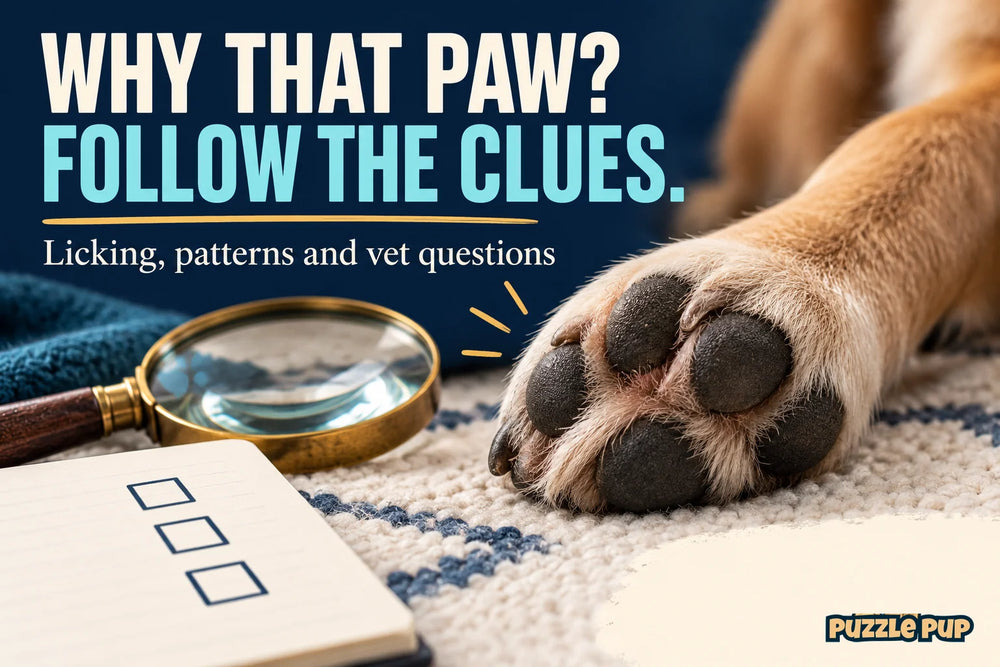
Occasional grooming is different from returning to the same paw again and again. Repeated licking deserves a closer look, especially when it changes how your dog walks, rests, or uses the paw.
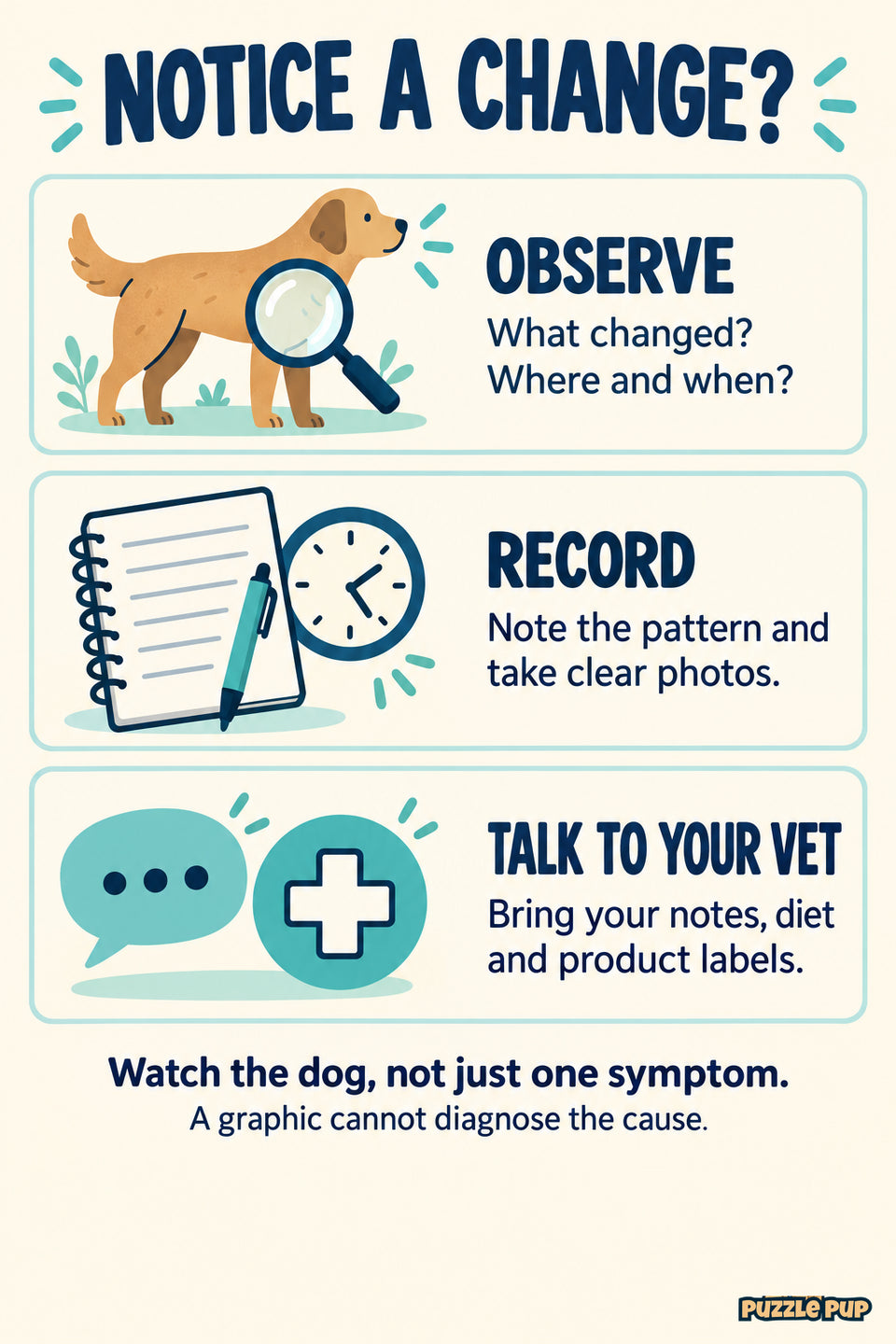
What to record before your vet visit
Start with a gentle look
If your dog is comfortable being handled, check the pads, nails, and spaces between the toes. Notice whether one paw or several are affected. Look for debris, a damaged nail, redness, swelling, or discharge. Do not dig into the skin or remove deeply embedded material yourself.
Stop if your dog pulls away or seems painful. An examination may be safer and more useful than continuing at home.
Keep several causes in view
Irritation, injury, infection, parasites, allergies, pain, or a behavioral pattern can all be part of the investigation. Merck's itching overview describes why licking can accompany several skin problems.
Nighttime licking, a smell, staining, or answering yes to a short checklist cannot diagnose the cause. Rinsing after a walk may remove material, but improvement after rinsing does not prove an allergy or rule out another problem.
Record what changes
- One paw or several, and the exact area.
- Whether it began after a walk, grooming, or a new household product.
- Redness, odor, swelling, damaged skin, or limping.
- Whether sleep and normal activity are affected.
- Foods, treats, medicines, and supplements currently used.
Take photographs for comparison and bring the record to your veterinarian.
Avoid turning a chew into a diagnosis
Our Allergy Soft Chews contain label-listed postbiotic, quercetin, turmeric root powder, ashwagandha root extract, and other actives. They are not a way to establish why a paw is sore or to replace care for an injury or infection.
Use the complete product label when discussing a supplement. The PuzzlePup quiz compares products and does not identify an allergy profile.
Get help when the paw needs it
Call your veterinarian for swelling, bleeding, discharge, strong odor, marked pain, a damaged nail, trouble bearing weight, or licking that persists or returns. Avoid essential oils, human creams, and medication unless your veterinarian approves the exact product.
For a compact checklist, see paw licking: checks and when to call.
View the complete Allergy label

Frequently asked questions
Does licking at night mean allergies?
No. Timing is useful information but cannot identify the cause by itself.
Does a corn-chip smell diagnose yeast?
No. Smell alone does not diagnose an infection. Mention odor alongside redness, discharge, soreness, or repeated licking to your veterinarian.
Should I wait several weeks to see whether a supplement helps?
Do not use a product trial to delay assessment of a painful, damaged, or repeatedly irritated paw.
Can I use a cream to stop the licking?
Ask your veterinarian about the exact product. Dogs can lick topical products off, and the underlying cause still needs attention.