
Why Is My Dog So Itchy? Clues to Bring to Your Vet

Scratching is a symptom to investigate, not a shopping category. Where your dog scratches, when it happens, and whether the skin has changed are useful observations to bring to a veterinarian.
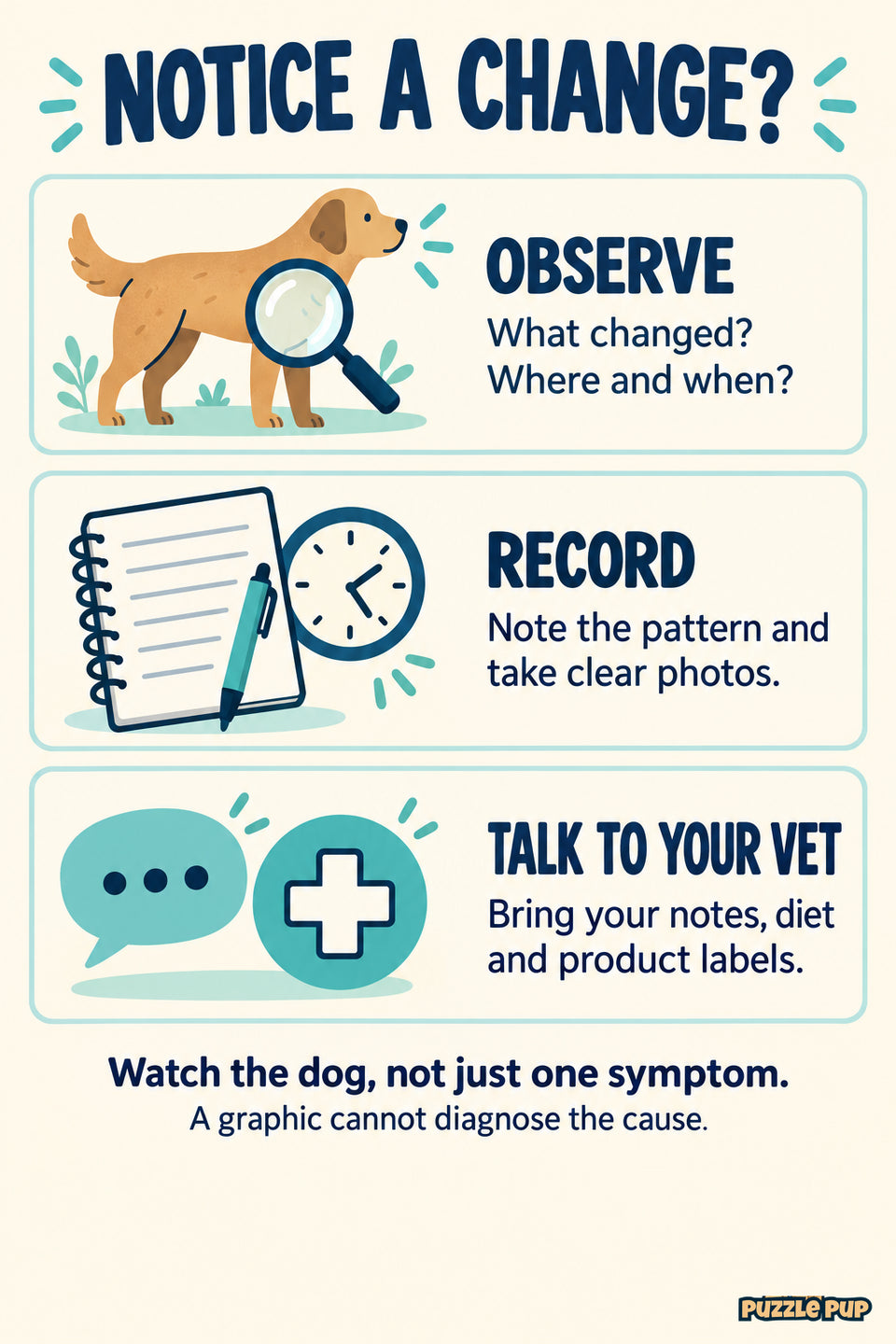
What to record before your vet visit
Seven possibilities behind the scratching
- Fleas or other parasites: not seeing a parasite does not settle the question.
- Environmental allergy: seasonal timing is a clue to record.
- Food allergy: discuss a properly planned investigation rather than switching foods at random.
- Dry or irritated skin: note bathing, grooming, humidity, and coat changes.
- Contact with an irritant: record new cleaners, lawn products, or grooming products.
- Bacterial or yeast infection: odor, discharge, redness, or soreness needs attention.
- Behavioral licking: consider the context after medical causes have been assessed.
These possibilities can overlap. The Merck itching guide explains why identifying the underlying cause matters.
Make a useful record
Photograph the affected area in similar light, and note sleep disruption, paw licking, ear discomfort, and any change in appetite or activity. Write down all medicines, foods, treats, supplements, and grooming products. Note whether one area or several are affected.
A short record is useful at an appointment. It is not a reason to wait when your dog is uncomfortable.
Choose care for the actual problem
Ask your veterinarian about prevention, bathing, diet investigation, and treatment suited to the findings. Avoid human creams, medication doses from the internet, and repeated product changes that obscure the pattern.
For practical environmental steps, see our seasonal home-care guide. Check that each step fits your dog's existing treatment plan.
Compare supplements separately
PuzzlePup Allergy lists postbiotic, quercetin, turmeric, ashwagandha, and other actives. Skin & Coat has a different ingredient panel and a guaranteed analysis including omega-3, EPA, DHA, and biotin.
Read both full labels before choosing. The product match quiz helps organize options; it cannot determine why your dog itches.
When to call
Contact your veterinarian for recurring or persistent itching, broken skin, strong odor, discharge, pain, ear problems, or disturbed sleep. Sudden facial swelling, trouble breathing, or collapse needs urgent care.
View the complete Allergy label

Frequently asked questions
Can my dog be itchy without visible fleas?
Yes. Visible fleas are only one observation, and several other causes can look similar. A veterinarian can investigate.
Does seasonal timing prove an environmental allergy?
No. It is useful history, but it does not establish the cause by itself.
Can a supplement diagnose or treat the cause?
A supplement label cannot diagnose itching. Discuss ongoing symptoms with your veterinarian and compare nutrition products separately.