
Senior Dog Slowing Down? Small Changes Worth Noticing

Short answer: the most common early signs a dog is aging are stiffness after rest, hesitating at stairs or jumps, slowing down on walks, sleeping more, weight changes, and a greyer/duller coat. Some are normal aging you can manage at home; others (sudden limping, pain, big behavior changes) need a vet. The goal is to spot it early and make everyday life more comfortable.
Dogs are great at hiding discomfort, so the slowdown often creeps up. Here's what to watch for — and what actually helps.
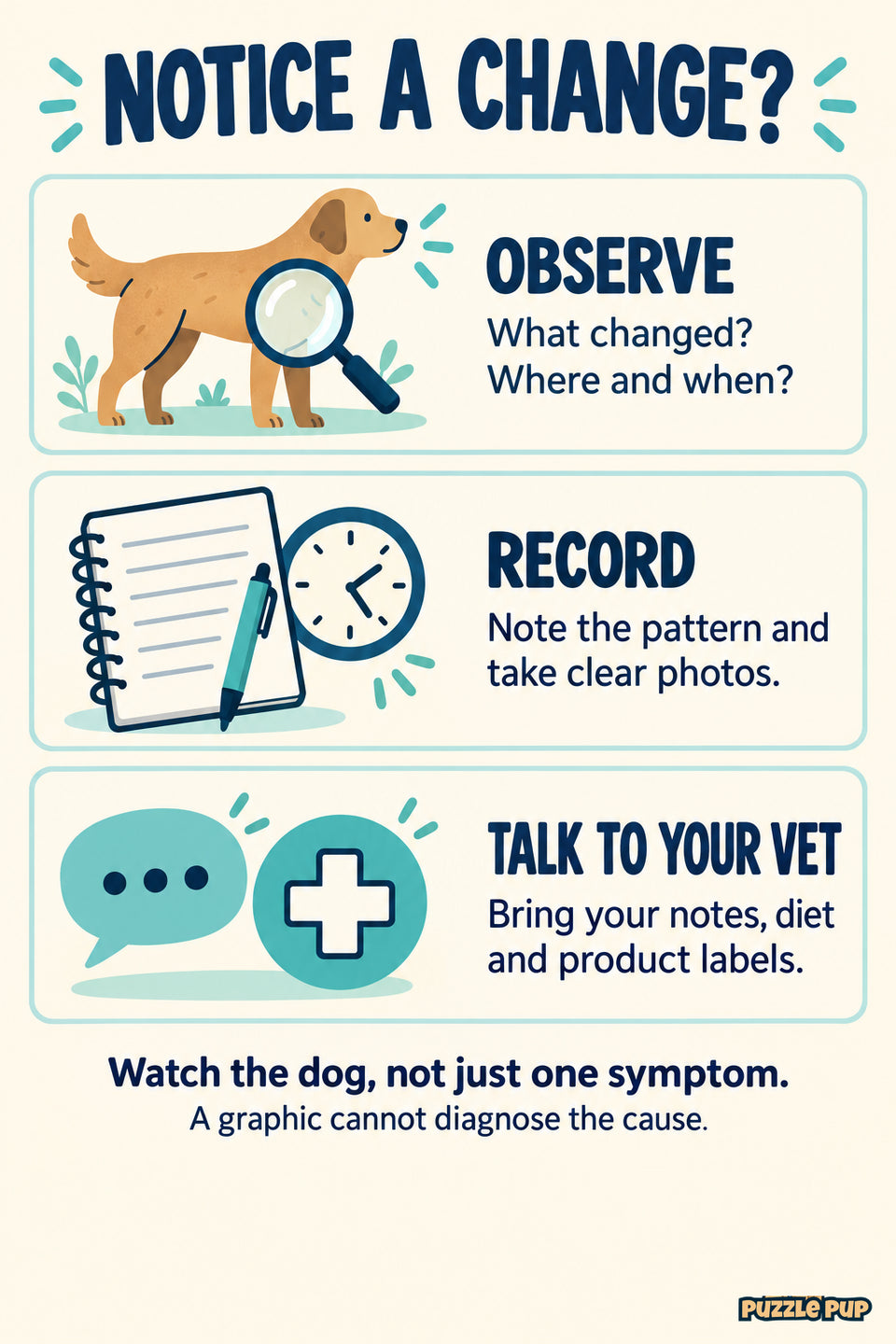
What to record before your vet visit
1. Stiffness, especially after resting
The classic first sign is getting up slowly after a nap and loosening up after gentle movement. That pattern can involve joints, but stiffness alone does not tell you the cause. What helps: record when it happens, use non-slip footing and soft bedding, keep movement comfortable and consistent, and bring persistent or worsening changes to your veterinarian. For a mobility-only checklist, see the joint-pain guide.
2. Hesitating at stairs, jumps, or the car
Pausing before stairs or the car is a change to record. It can have several causes; do not assume it is simply age or a need for a supplement. Keep routes secure and discuss suitable ramps, traction, activity, and care with your veterinarian.
3. Slowing down on walks
Shorter routes, lagging behind, or wanting to turn back early. What helps: swap one long walk for two short ones, keep it consistent (fitness matters at any age), and watch that it's stiffness — not a breathing or heart issue (see your vet if there's coughing or heavy panting).
4. Sleep, play, or behavior changes
More naps can happen with age, but pacing at night, getting stuck, house-soiling, new anxiety, withdrawal, or changed interactions deserve attention. Cornell notes that cognitive changes can build gradually and recommends tracking patterns such as disorientation, interaction changes, sleep/wake disruption, house-soiling, activity changes, and anxiety. What helps: keep plans predictable, use low-impact scent games or a snuffle mat, add nightlights where useful, and share your notes with your veterinarian. Read Cornell’s senior-dog cognitive guidance.
5. Weight, appetite, thirst, or bathroom changes
Some senior dogs gain weight as activity changes; unexplained weight loss, increased thirst or urination, appetite shifts, vomiting, diarrhea, or new accidents can point beyond normal aging. What helps: weigh your dog regularly, note food and water changes, keep treats within the daily calorie plan, and have unexplained changes evaluated instead of assuming they are “just age.”
6. Hearing, vision, grooming, or coat changes
A greying muzzle is cosmetic. New startle responses, trouble finding familiar objects, reluctance in dim light, overgrown nails, matting, or a dry or thinning coat are more useful plan signals. What helps: approach a sleeping dog gently, keep furniture and bowls predictable, add lighting and traction, maintain nails and grooming, and ask your veterinarian about sudden sensory or skin changes. Omega-3 fatty acids can maintain normal skin and coat health as part of the daily diet.
A 10-minute monthly senior-dog check
Once a month, record a short video of your dog standing up and walking, check body weight, look at teeth and gums, feel for new lumps, inspect nails and paw pads, and note sleep, appetite, thirst, bathroom habits, and social behavior. Bring the trend—not just one isolated day—to the next appointment. AAHA’s senior-pet care recommendations emphasize regular exams, dental, nutrition, behavior, mobility, and diagnostic screening; its client guidance recommends an exam every six months for dogs older than seven, including dogs that appear healthy.
Helping your dog age comfortably
You can't stop aging, but you can make it easier:
- Discuss mobility changes. Bring observations and the full labels of any products you are considering to your veterinarian. A supplement should not replace assessment of stiffness or pain.
- Review skin and coat changes. Keep grooming comfortable and discuss unexplained thinning, irritation, or a change in texture before choosing a nutrition product.
- Adapt the home. Non-slip rugs, ramps, soft bedding, shorter/more frequent walks.
- Keep the mind busy. Gentle enrichment keeps older dogs sharp and content.
Not sure which daily plan fits the pattern you are seeing? The Find Your Dog's Match quiz takes about a minute and recommends a PuzzlePup starting point; it does not diagnose the cause of a health change.
See your vet promptly if: your dog is suddenly limping or won't bear weight, is in obvious pain, has lost weight without trying, is drinking/urinating much more, or shows a sudden behavior change. Those aren't "just age" — they need a real exam.
Frequently asked questions
What are the first signs a dog is getting old?
Track changes across the whole dog: mobility after rest, stairs and walks, sleep and behavior, weight or appetite, thirst and bathroom habits, hearing or vision, grooming, skin, and coat. Gradual change is useful to record; sudden or severe change needs veterinary attention.
At what age is a dog a senior?
There is no single senior birthday for every dog. AAHA defines the senior life stage as roughly the last 25% of a dog's expected lifespan, so breed, size, history, and individual health matter.
How can I help my senior dog's joints?
Discuss comfortable activity, body condition, home traction, bedding, and appropriate care with your veterinarian. Supplements cannot diagnose the cause of a movement change.
Is it normal for an old dog to slow down?
Some gradual change can come with aging, but old age is not a diagnosis. Sudden limping, pain, weight loss, increased thirst or urination, house-soiling, night pacing, or major behavior changes should be discussed with a veterinarian.
How often should a senior dog see the vet?
AAHA client guidance recommends veterinary examinations every six months for dogs older than seven, including dogs that appear healthy. Your veterinarian may adjust the schedule for breed, size, health history, and current findings.
This article is for general education, not veterinary advice. Sudden or severe changes in your dog's mobility, appetite, thirst, bathroom habits, senses, or behavior should be evaluated by your veterinarian.