
Dog Eats Too Fast? Make Mealtime More Interesting
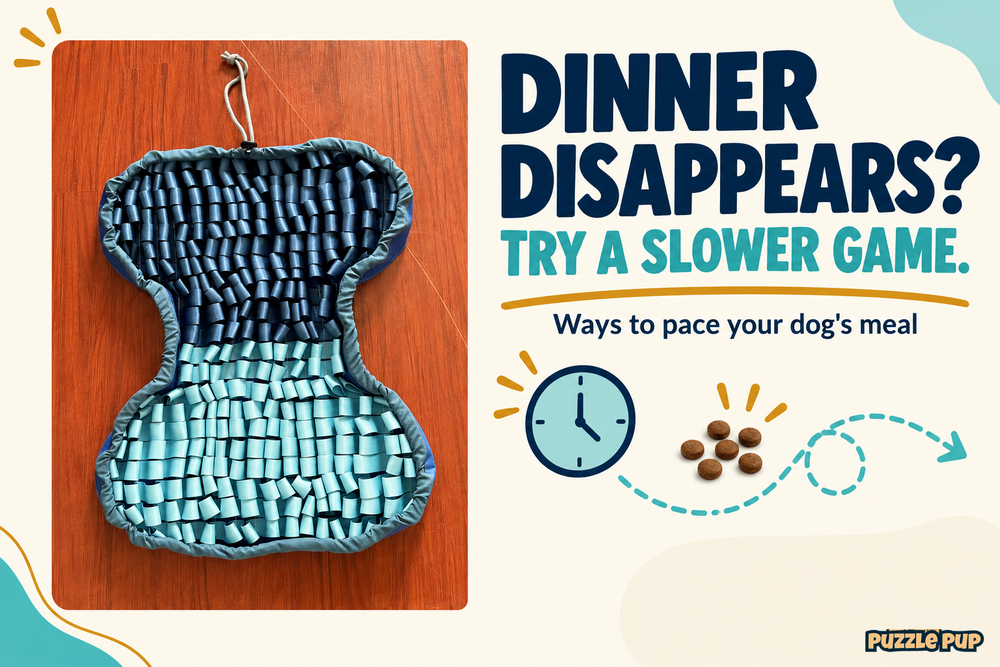
If dinner disappears quickly, change one part of the setup at a time and watch how your dog responds. Keep the total food allowance consistent. The goal is comfortable access to food with smaller bites, rather than a puzzle your dog finds frustrating.
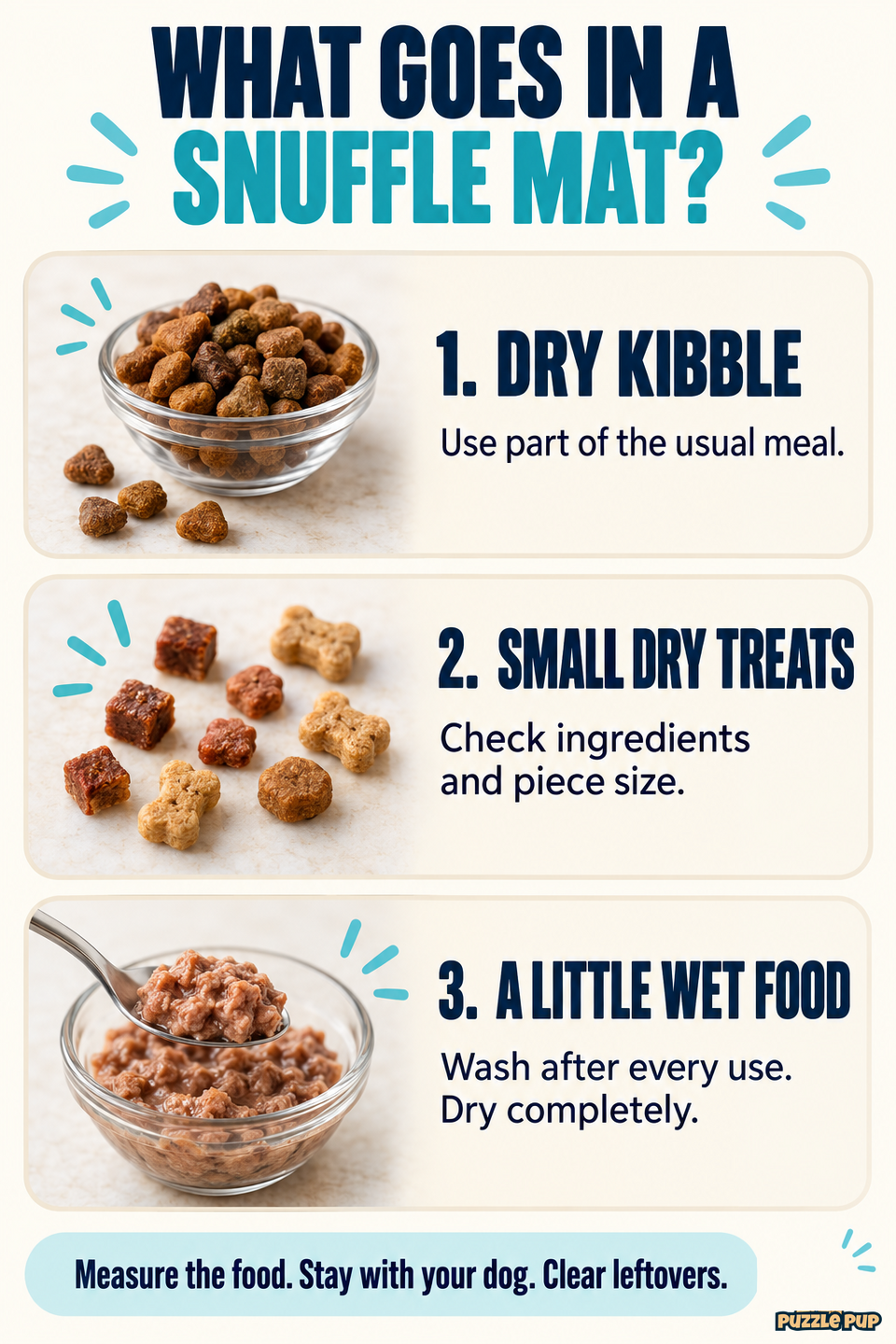
Food choices at a glance
Seven ways to change the feeding setup
- Try a suitable slow-feeder bowl. Choose a size and shape your dog can reach into comfortably.
- Use a food puzzle. Start with an easy setting and supervise.
- Spread dry food out. A clean, stable tray can separate pieces without adding a complicated puzzle.
- Use part of the meal for training. Offer small rewards for familiar cues if your dog takes food gently.
- Discuss meal frequency. Your veterinarian can help choose a schedule that fits your dog’s age and health.
- Try a supervised fabric search. Hide a measured amount of dry food in the premium Mat’s loops. Put it away after the game.
- Give each dog a separate feeding space. Watch their individual pace without competition around the same bowl.
The AKC slower-eating guide covers bowls, food puzzles, trays, training rewards, and meal frequency. Its snuffle-mat guide explains supervised searching and separate spaces.

Observe before making the next change
Record which setup you used and how your dog ate. Use the free seven-day tracker to keep the comparison consistent. End a session if your dog starts chewing the tool or cannot reach the food comfortably.
Turn the next dry meal into a sniff-and-search game
Large working area, deep fabric loops, machine-washable care, and a start-easy setup for supervised enrichment.
Frequently asked questions
How fast is too fast for a dog to eat?
There is no universal minute cutoff for every dog and meal. Look for gulping, coughing, gagging, regurgitation, vomiting, marked arousal, or finishing before the dog has taken normal pauses. Measure a baseline and aim for a meaningfully slower, calmer meal.
Can a slow feeder prevent bloat or GDV?
No feeding tool can guarantee prevention. Rapid eating is one of several associated risk factors. Owners of large, deep-chested, older, or family-history dogs should discuss GDV risk and preventive options with their veterinarian.
Can a snuffle mat hold a full meal?
For the premium PuzzlePup Snuffle Mat, use a measured portion of kibble, small treats, or a little wet food. Start with easy, visible finds and supervise. After wet-food use, remove leftovers, machine wash cold on a gentle cycle, and air dry flat until the folds and backing are fully dry. Check the allowed foods and care directions for any other feeding toy.
What if my dog chews the slow feeder or snuffle mat?
Remove the tool and redirect to an easier food-finding setup. A damaged product can create an ingestion hazard. Snuffle mats are enrichment mats, not chew toys.
Should I feed smaller meals more often?
That can be appropriate for some dogs, but the total daily amount and schedule depend on age, health, food, and veterinary guidance. Do not increase daily calories when dividing portions.